How to Check Meta Title Length Using Free Online Tools?
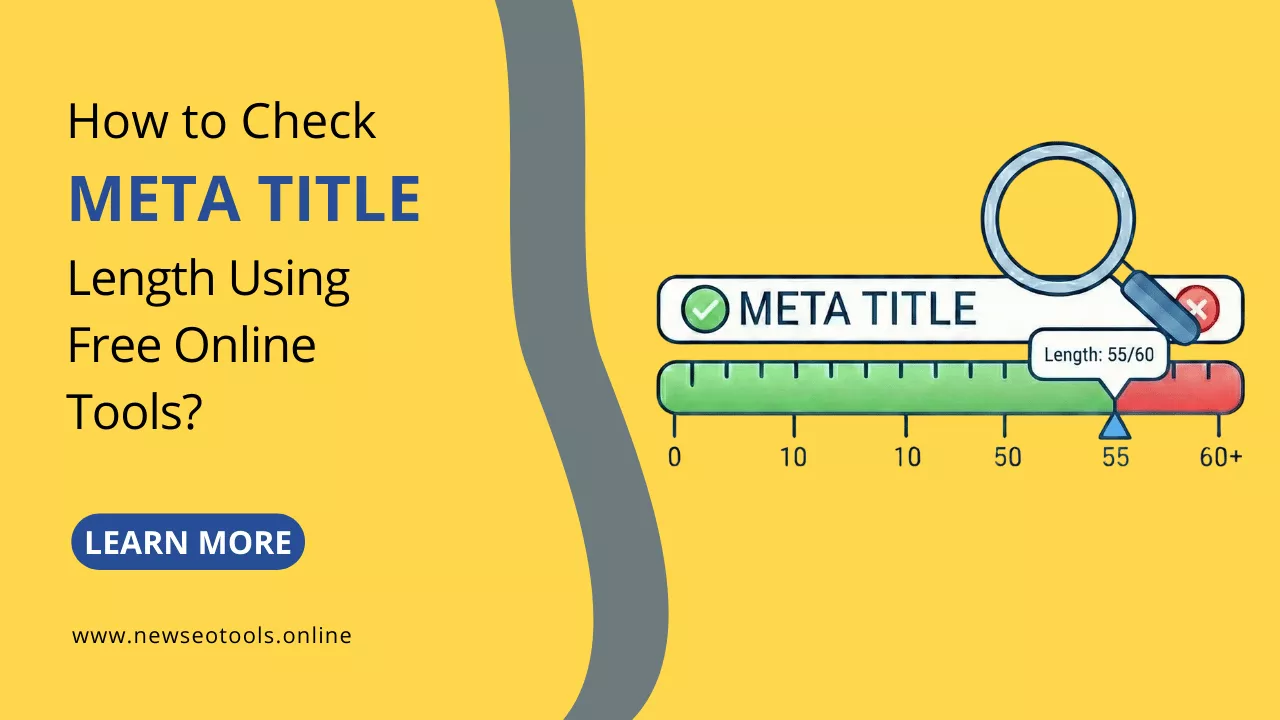
Google truncates meta titles longer than 60 characters, removing key messaging and reducing click appeal in search results. Moz analyzed over 50,000 title tags and found Google frequently alters how titles appear in SERPs, even when SEOs carefully craft them.
Moz reviewed 74,810 ranking keywords across 10,370 URLs and detected 8,646 rewritten titles. Nearly 2,000 cases involved simple truncations, while most remaining rewrites were brand removals or brand formatting changes. Free meta title length tools help prevent truncation triggers and delimiter issues that commonly lead to rewrites.
This guide covers five free meta title checker tools, demonstrates how to use them step-by-step, and provides optimization methods to reduce rewrite and truncation risk.
Understanding Meta Title Length Requirements
Search engines display meta titles as clickable headlines in results pages. Google allocates approximately 600 pixels for desktop title display, which translates to roughly 50 to 60 characters. Mobile devices show 120 pixels fewer, requiring tighter limits.
Why Length Matters
Titles beyond display limits get truncated. Moz discovered 8,646 rewritten titles across their ranking dataset, with many rewrite cases tied to formatting, length, and delimiter handling. Overly long or complex titles increase rewrite risk.
Character vs. Pixel Counting
Google measures by pixel width rather than character count. Wide characters like W consume more pixels than i or l. Tools like SERP Simulator use pixel measurement to provide accurate predictions.
Top 5 Free Meta Title Checker Tools
SERP Simulator by New SEO Tools
This tool provides a real-time preview showing the exact Google display across mobile and desktop views. SERP Simulator uses pixel-based measurement to deliver accurate length assessments. The tool checks single URLs individually, making it ideal for content creators optimizing individual pages. Visit the simulator, input your title, review the preview, and adjust until the green indicator appears.
Screaming Frog SEO Spider
Screaming Frog analyzes entire websites, exports title data, and highlights length violations. The free version crawls 500 URLs, making it suitable for small business websites conducting comprehensive audits. Download the software, enter your URL, navigate to the Page Titles tab, and filter by length.
SERP Simulator by Mangools
Mangools offers a real-time preview displaying the exact Google display across mobile and desktop views with pixel-based measurement. Content creators use this tool when optimizing individual pages. Navigate to serpbuilder.mangools.com, input your title, review the preview, and adjust until the green indicator appears.
Yoast SEO Plugin
Yoast provides live feedback during content creation through traffic light indicators and automatic recommendations. This WordPress-exclusive plugin requires installation but serves WordPress bloggers publishing regular content. Install Yoast, write content, monitor the meta title field, and follow color-coded guidance.
Google SERP Preview Tool by SEO Review Tools
SEO Review Tools provides a live preview that shows the exact Google search appearance, with real-time character count and pixel measurement. The tool shows both desktop and mobile previews simultaneously, helping creators visualize how titles appear across devices. Navigate to the website, enter your title and meta description, review the live preview, and adjust based on visual feedback.
Interpreting Your Results
Green Zone (50 to 60 Characters)
The optimal range ensures complete display across devices. Titles provide sufficient context without truncation risk. Buy Organic Coffee Beans | Free Shipping | JavaBrew demonstrates a 58-character title that fits within safe parameters.
Yellow Zone (60 to 65 Characters)
Borderline cases require pixel-width verification. The desktop may display fully while the mobile truncates. Testing across both formats prevents surprises.
Red Zone (65+ Characters)
Titles exceeding 65 characters trigger guaranteed truncation on most search results. Critical information gets cut, reducing effectiveness and increasing rewrite likelihood. Moz observed thousands of rewrite cases when titles contained delimiter splits and complex structures.
Pixel Width Considerations
www consumes 45 pixels while iii uses 15 pixels. Character count alone provides an incomplete assessment. Pixel-based tools like SERP Simulator by New SEO Tools deliver precise measurements.
Optimizing Oversized Meta Titles
Prioritization Strategy
Place brand names at the end. Running Shoes for Marathon Training | Nike becomes Marathon Running Shoes | Nike through strategic restructuring. Lead with primary keywords capturing search intent. Remove unnecessary modifiers like very, really, and the best.
Word Choice Techniques
Replace and with the ampersand symbol, saving two characters. Use vs instead of versus, saving four characters. Substitute 2026 for year 2026, saving five characters. The Complete Guide to Content Marketing in the Year 2026 becomes Content Marketing Guide 2026 through systematic compression.
A/B Testing Recommendations
Create two title variations using different approaches. Test both versions for 30-day periods minimum. Track click-through rates using Google Search Console. Implement winning variation across similar pages. Repeat the process quarterly as search trends evolve.
Common Meta Title Mistakes to Avoid
Keyword Stuffing
Buy Shoes, Running Shoes, Athletic Shoes, Sports Shoes Online demonstrates poor practice. Running Shoes for Athletes | Free Returns | SportPro provides better results. Stuffing triggers spam filters and reduces readability.
Missing Brand Names
Omitting the brand reduces recognition and trust signals. Position brands strategically using Product Name | Brand format. Wireless Headphones | Sony performs better than just Wireless Headphones.
Duplicate Titles
Google penalizes identical titles across multiple pages. Each page requires unique, descriptive titles. Screaming Frog identifies duplicates during site crawls.
Generic Descriptions
Home Page or Welcome provides zero SEO value. Specific titles like Handcrafted Leather Bags | Artisan Collection attract qualified traffic.
Advanced Tips for Meta Title Optimization
Schema Markup Integration
Add structured data to enhance search result displays. Schema markup does not affect title length but improves visibility. Google provides a Structured Data Testing Tool for validation.
Dynamic Title Testing
Implement title templates using variables in the format [Product] | [Category] | [Brand]. E-commerce sites generate thousands of optimized titles automatically. Shopify and WooCommerce support dynamic title structures.
Local SEO Considerations
Include city names for location-based searches. A plumber in Austin, TX, demonstrates geographic targeting. Google prioritizes local relevance for service queries. Reserve 10 to 15 characters for geographic modifiers.
Seasonal Adjustments
Update titles quarterly to reflect current offers. Summer Sale versus Winter Clearance demonstrates seasonal variation. Fresh titles signal active content management to search engines. Set calendar reminders for regular review cycles.
Conclusion
Moz analyzed over 50,000 titles across 74,810 keywords and 10,370 URLs, discovering 8,646 rewritten titles in Google results. About 2,000 cases involved simple truncations, while over half of the remaining rewrites were minor brand edits rather than catastrophic changes.
The worst rewrites were linked to delimiter splits, long titles, and complex formatting. Free meta title length tools help detect these risks early using pixel previews and length checks.
Keep titles concise, reduce delimiter complexity, align with H1 text, and test previews before publishing. Regular title audits help ensure your intended message, not Google's rewrite, reaches users in search results.